
Some Press Releases End Up in a Museum
There’s no real way of knowing how far a story might go, or what it might mean to someone looking back on it years later. Before something becomes history, it’s often just another story someone thought was worth sharing.
While visiting New York City, I stopped by the Museum of the Moving Image in Queens, which had been on my list of places to visit for quite some time. But while exploring the Jim Henson exhibition, finding a press release from 1963 wasn’t something I expected to see.
The year is 1963, and television has become a big part of American life, bringing news, entertainment and new personalities into living rooms across the country. But on ABC’s The Jimmy Dean Show, one unlikely performer is becoming a fan favorite. It’s not a singer or a movie star, but a shaggy puppet dog named Rowlf.
Created by Jim Henson, Rowlf had won over audiences and received an outpouring of fan mail after the first appearance. Naturally, ABC saw a story worth sharing and an opportunity to introduce audiences and a growing fanbase to more of the creativity behind the character. A press release can help.
Dated Oct. 14, 1963, the network’s press release, “Pooch Came for a Visit…and Hasn’t Left Yet,” introduced Frank Peppiatt and John Aylesworth, the writers responsible for giving Rowlf something to say. But their challenge? Writing for a dog who spoke like a human but still saw the world from a dog’s perspective.
It’s a pretty clever angle. ABC gave reporters an entertaining look at the people and creativity behind a character audiences were coming to love. They also shared plenty of details to help bring the story to life. Even the release itself had a little personality, which seems fitting for a story about a puppet like Rowlf.
Rowlf would eventually become Henson’s first nationally known Muppet, years before Sesame Street and The Muppet Show reached audiences around the world.
Later in the exhibition, I came across another release from 1989 that showed how far Henson’s work had evolved. It introduced Waldo C. Graphic, a computer-generated Muppet controlled through a performer’s movements. More than 25 years after ABC shared Rowlf’s story, Henson was exploring new technology, and another press release was helping explain how it worked.
Seeing how long press releases have served as a way to communicate news was interesting. While the tools and ways we reach journalists have certainly changed, we’re still looking for those creative angles that set a story apart, sharing developments that matter and giving reporters useful information they need to help tell a story.
There’s no telling whether the releases earned coverage when they were issued. Much less that the pages would eventually end up in a museum. But what was once written for the day’s news now helps document Henson’s early success and continued innovation and creativity.
We write press releases to help journalists cover what’s happening today, but I like knowing that the stories we help share can have a life beyond the news cycle. And sometimes, they even find their way into a museum.
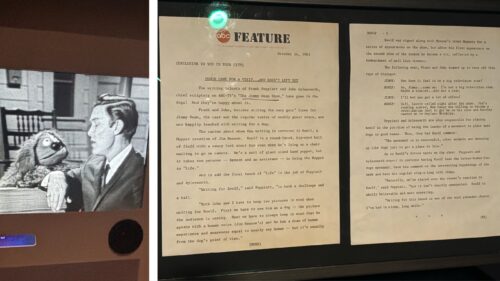
Photo by Justin Liggin taken at the Museum of the Moving Image in Queens, NY

